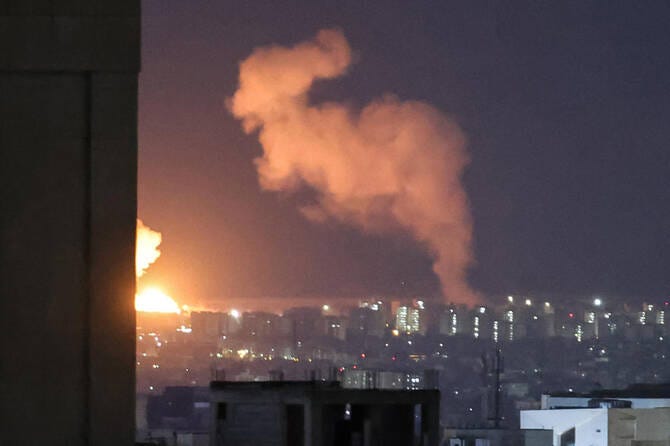
Having discussed various parts of the Iran conflict, this current round, the previous 12-Day round, and for many years previous in general, with some detail, I want to take the opportunity here to make some shorter points relevant to the current state of the war and its future.
A good place to start for background is this last piece:
The Second Round - How is it Going and Where is it Heading

I have been writing on Israel’s need to strike Iran for two decades or longer. I was concerned that due to fearing what need not be feared (the hyped paper tiger Iran was), we would be responsible for something that indeed ought to be feared (a nuclear Iran).
Thus far, I am afraid to say that my concerns of the regime change goal, we first discussed at the outset of the 12 Day War, are proving correct. The difference between the Persian Shia Iranians and their regime is an exaggerated one in the West. It is a popular uprising that overthrew the Shah and installed the Ayatollahs and not the other way around. More importantly, people don’t like to be, or to seem to be, treasonous. While the Jews and Americans are bombing you, at least in the short term, people are unlikely to hit to the streets.
The key targets to destroy if you indeed aim for such an uprising, are the prisons (with the effect of releasing prisoners), and the major Oil refineries. Though we are starting to see the very earliest of reporting on this (Some prisoners released or escaped in Western Kurdish regions, likely a sign of regime loss of control in at least these regions), and some fuel storages in Tehran were hit by the IDF, these critical components have not yet systematically targeted by the allies.
Note that even you do hit these, along with the military and government control assets that have been hit, a popular rising would sill likely need you to stop the Air War. At least until the popular uprising began, at which point you can provide it with air support. You could maintain a limited Air war against the missile program and launchers, but would have to be seen to have ceased operating against the country at large. The US and Israel are unlikely to wish to take this risk (of stopping for now, hoping for a regime change later), a luxury you lose when your stated goal is regime change, and one you could have enjoyed otherwise.
In lieu of a popular national uprising, as we discussed often you can face separatist actions, specifically by the Kurds and Balochs, perhaps also by Azeris and some Lurs. More on that later.
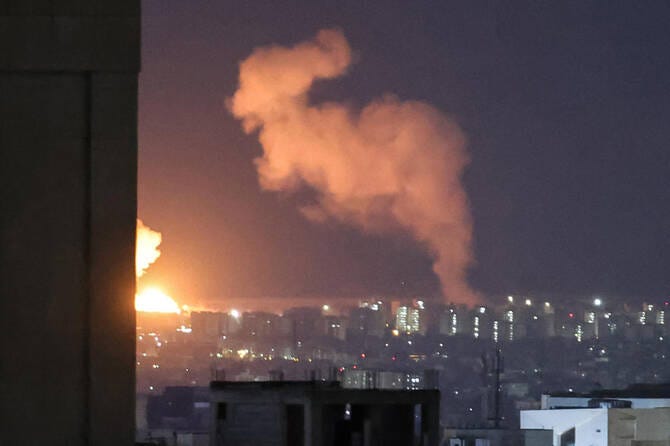
If a popular uprising does not organically take place, the US requires the quick formation of a defiant group to hold ground. Once they hold ground, they can advance quickly with US and Israeli air support. Aras they control will be supplied, while areas controlled by the regime will be increasingly isolated and blockaded.
However you have to chose your strategy and group wisely. Firing in all directions at once will not be helpful. Encouraging the easiest such group to act and advance, the Kurds, will only strengthen the nationalist resolve and cohesion of the Shia Persians backing the regime. One thing is to support the Kurdish uprising in Kurdish lands, another is to use them to advance on Tehran. Intelligent use of these forces can still be used as a launchpad to later create a broader insurgent group but a largely Kurdish advance on Tehran would cause panic among the Shia. Whatever government they did set up would not have broad support. I for one, would prefer to not once again take advantage of the Kurds under false pretenses but rather see the rise of an independent Kurdistan (and watch Erdogan’s reaction). The Kurdish reluctance to act at the moment, is well informed by the many times they were left hanged out to dry by the West.
If the Shah’s son, Reza Pahlavi, is to have any legitimate support in taking over the helm of government, if at a political or constitutional monarchal level, he would need to arrive relatively on the ground, where this group controlled the territory and advance with them. This would make him quite popular if not legendary. Arriving after the fighting is done as a US/Israel installed puppet will not endear him to anyone, nor be the likely start of a lasting and stable regime. A King must earn his crown (I’d love to see that).
Many folks were confused by Iran’s seemingly illogical attack on virtually every country in the region, when only two countries on earth were attacking it. I posit the only reason it seemed strange to people is because of its weakness.
Just like West drinks its own Kool-Aid, and thinks all Iranian people love them and just want to live under a Jeffersonian Constitution, all except the old Ayatollahs that rule them of course, so do the Iranians (drink their own Kool-Aid). We have been warned by the “experts” for years that attacking Iran would be catastrophic, lead to global chaos and even WWIII. Well how does that happen? Exactly like this, by Iran sowing chaos in the region in retaliation. It can’t strike out at the US at all, and barely at Israel, so it will strike out at everyone else. This is in order to do several things:
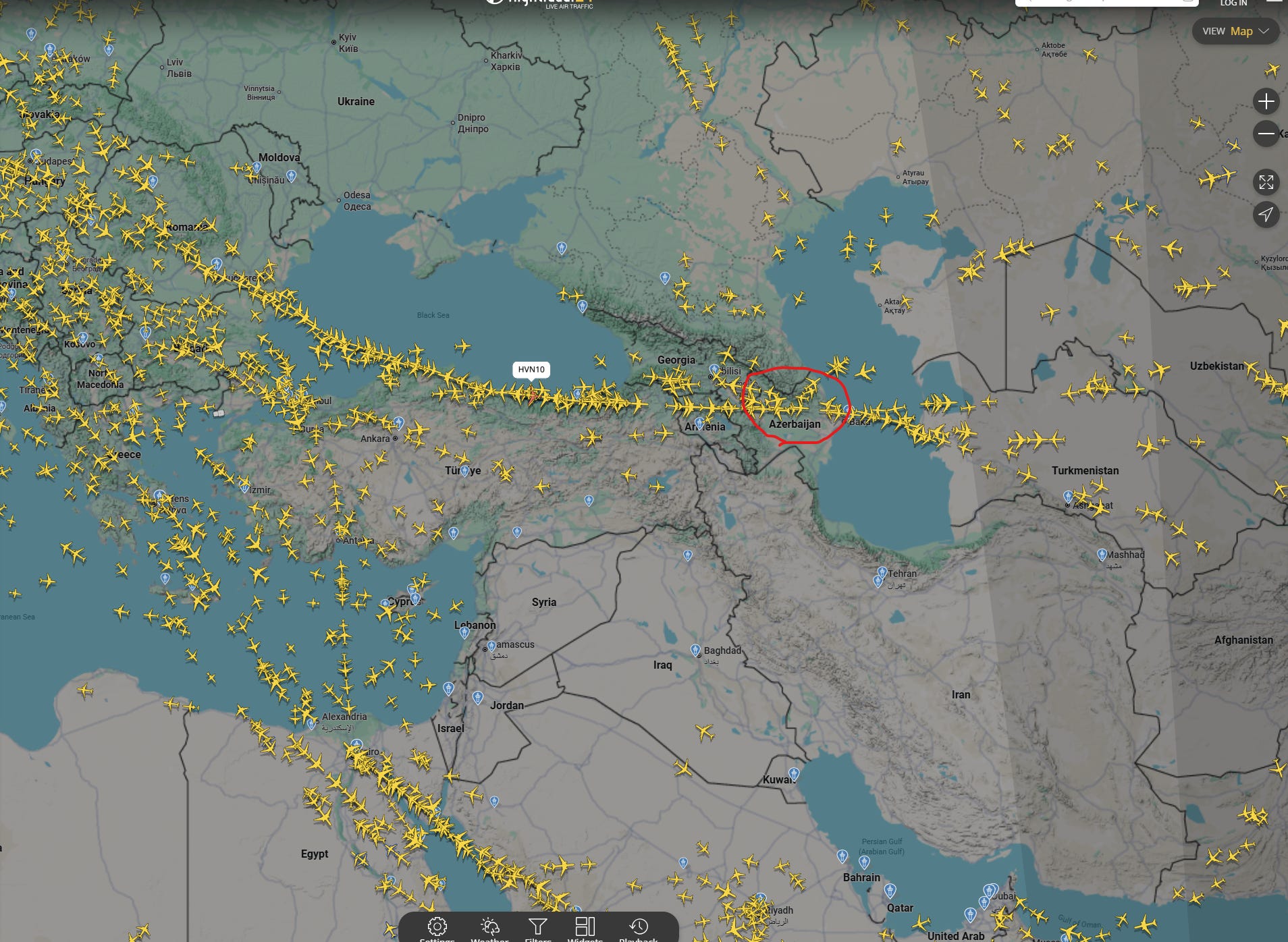
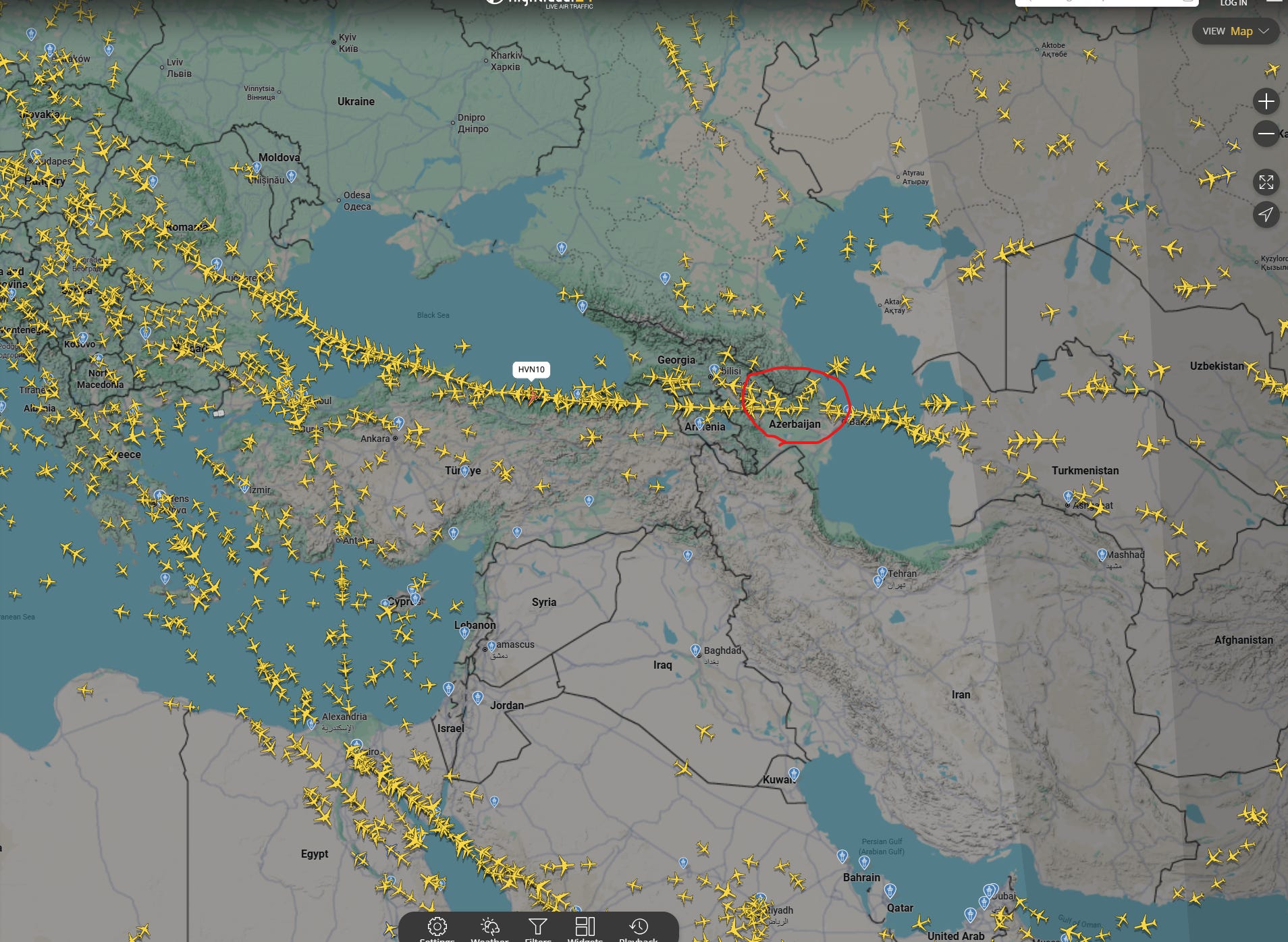
Cause a significant cessation of global shipping (especially oil shipping) and air travel. With the war in Ukraine going on, closing the Azerbaijani airspace is a strike at the heart of the bottleneck maintaining east-west travel across Eurasia. If it can cut air travel across Saudi Arabia and the strait of Hormuz further south, it is nearly a full blockade.
Create the impression on many countries that it is the US and Israel’s fault that they are being attacked, not Iran’s fault (the actual attacker). And that the US relations and literal military bases that they thought protected them, are actually the cause for them being harmed. At the same time, the Iranians wish to show that the Americans cannot protect them.
While ballistic missiles require equipment and forces to fire that are fast being wiped out in Iran, drones are a different story. They can often successfully target civilian areas of gulf states close by, they are cheap, available in vast numbers and do not require much to launch (though as long as the US and Israel remain resolute, as the air superiority is maintained and strengthened in Iran, we will their ability to continue to launch these in large numbers also diminish). Much of the world did not make the distinction during the 12 day that while Israel was targeting military and regime targets in Iran, while Iran was trying to hit any Israeli apartment building, they are noticing it now. The defense game is completely different. Iranian families don’t have to spend nights in bunkers as Israeli families did. Iran’s AD doesn’t have to try to protect every home in Iran from attack, just military and regime sites. Anyways, despite this asymmetry we managed just fine. The gulf states are having a harder time protecting civilian buildings, even just from slow moving drones and not ballistic missiles.
The Iranian strategy is simply to hold on, relying on the Western misunderstanding of their country, and hold on while the chaos they sow around the strategically important region grows, and causes mass pressure on the Americans to back down. Ideally, much like the Ukrainian strategy, by attacking enough players (all with their own complex set of geopoitical interests), Iran hopes to draw other people into the conflict and break down the alliance against it.
That was always the plan. The reason it seems so absurd now is because Iran does not have the strength to carry it out. It is not sowing chaos around the region, it is lashing out with pin prick attacks all over the place. And that is why the strategy looks strange. Now, with a sufficiently weak willed US administration, it can still work. The regime as I have said frequently certainly has longer staying power than the Americans believed. And some may see the the virtual cessation of shipping across the strait of Hormuz as evidence that they can disrupt world trade, and critical the global flow of oil.
To address that let me briefly assert here that the Iranians have not closed the Strait of Hormuz, and they can’t. Much like in the Subprime Mortgage Crisis, at least in relation to the chain reaction of bank failures, was caused not by organic bankruptcies but by government rules, namely Mark-to-Market accounting rules (or as is more commonly thought and the mainstream media explained the reason, “Greed”), here we have something similar at play. The insurance rules today require huge capital requirements based on “black-swan” events. Adapting quickly to these is very difficult or impossible so insurance carriers preferred to drop their war risk insurance on ships traversing the region. The Iranians are not stopping the shipping, but rather western government rules on insurance policies are.
One encouraging sign I saw of intelligent planning work having taken place on the American side, was that Insurance and/or escorts would be provided by the US to all ships. Now, it would take a long article in itself to discuss these mattes, but sufficed to say that this shows geopolitical and economic understanding, as opposed to the usual circus we see in Washington in recent years (think the Woke-driven push of Ukraine to war with Russia, the entire Democrat section of the Senate kneeling on one knee wearing some form of African attire (ns giant face masks of course).

That’s the usual circus. Compare to that, knowing that they would have to issue insurance to shipping pre-strikes was quite refreshing. In any event, if the US can solve this issue, you will see traffic across the Strait without issue. Not necessarily I mean without issue whatsoever, there is a war going on after all, but I mean relatively uninterrupted. Prices fittingly should go for example, from 1 to 2 percent of value (for insurance) to 3 or 4 percent.
The Iranian strategy is logical and is the best they can do at this point. It is not stupid, stupid is what they have done for decades since the revolution. At this point, there isn’t much they can do other than hold on and cause as much chaos as they possibly can. With that said, attacking Azerbaijan of all places, might prove a mistake as that is a country with honor, and which knows how to win wars. They also share a border with a large Iranian region of majority Azeris. The weak attempt at blocking the air corridor was probably not worth invoking their ire, but then again… even an Azerbaijani intervention can throw off the US’s goals… Iran wants as much chaos as possible. Having seen been weak by their population (I discussed that at length in the past) too often, they now have no choice but to play strength till the end.
Finally, note that a very likely outcome, if the US can neither find nor create its force on the ground to support by air and rapidly advance, nor trigger a nation-wide uprising, then a fake regime change can take place. Members of the army (but not the IRGC), the Artech, or other such lesser known regime figures can take over and negotiate an end of the war with the US. This would be the regime surviving chameleon style, while giving Trump a way out in declaring victory regarding his regime change. From Israel’s point of view, as long as the deal made with them regarding the nuclear and missile program is clear and effective, and the subsequent “friendly” regime doesn’t end up being a shield of immunity to protect them instead, that would be just fine. Who rules the Persians is their business. I just don’t like failing to achieve declared goals. Which is why it’s good to think about them first.